The UI/UX Design Process Explained: From Research to Launch
By Zenix UX · June 30, 2026 · 9 min read
"What do we actually get, and when?" is the question we hear most from first-time clients — usually somewhere around the second email, right after the initial excitement of "let's do this." It's a fair question. Hiring a design agency can feel like handing your product into a black box for six weeks and hoping something good comes out the other end.
It shouldn't feel that way, and with a clear process, it doesn't. Here's exactly what happens across our four phases, in the order it actually happens.
Phase 1: Discovery
Before anyone opens Figma, we're in stakeholder interviews, understanding your users, and auditing whatever competitors or existing product you already have. This phase exists to prevent the single most expensive mistake in design: building the wrong thing beautifully. For Lumin, discovery meant interviewing fifteen casual fitness users to find the actual complaint driving app abandonment — "too many numbers, not enough guidance" — before a single screen got designed around fixing it.
You should expect to leave discovery with a clear, written scope and a plan — not vague reassurance that "we've got it from here."
Phase 2: Design
This is the phase most people picture when they think of "design" — but it starts lower-fidelity than most expect. Wireframes come first, establishing structure and flow without the distraction of color or type. Only once those are approved do we move to high-fidelity UI, then an interactive prototype you can actually click through, and a design system so the visual language stays consistent as the product grows.
You review at every step in this phase, not just at the end — nothing moves to build with your sign-off missing.
Phase 3: Build
Depending on your engagement, this is either us developing the approved designs directly, or handing off an organized, developer-ready package — tokens, specs, and assets — to your own team. Either path, what launches should match what you approved to the pixel; that's the entire point of the review discipline in phase two.
For Enpower Trading, build meant a Next.js implementation deployed on an edge CDN — design and development happening under the same roof so nothing got lost in translation between a Figma file and a live site.
Phase 4: Launch & Grow
Launch isn't the finish line — it's where real usage data starts telling you what actually works. We stay involved post-launch to measure, refine, and support the product as it evolves, rather than disappearing the moment the site goes live.
Realistic Timelines
A focused landing page typically takes 1–2 weeks. A full product design engagement runs 4–10 weeks depending on scope — more screens, more user flows, and more stakeholder review cycles all extend the timeline honestly, rather than getting compressed into an unrealistic promise up front.
What Deliverables to Expect at Each Phase
Discovery ends with a written scope and plan. Design ends with organized Figma files, an interactive prototype, and a documented design system. Build ends with a live, tested product or a fully specified developer handoff. None of these should feel like a surprise when they land — you'll have seen and approved the direction well before each phase closes.
How Revisions Actually Work
We run unlimited revisions within the agreed scope — meaning we iterate until the flows genuinely work, not until you've used up a pre-counted allowance of three change requests. Scope creep (new features, new pages) is handled as a separate conversation, but refining what's already in scope isn't something you should ever have to ration.
Curious what this looks like for your specific product? Take a look at our full process page or get in touch and we'll scope it against your actual timeline and budget.
Related projects
See it in practice
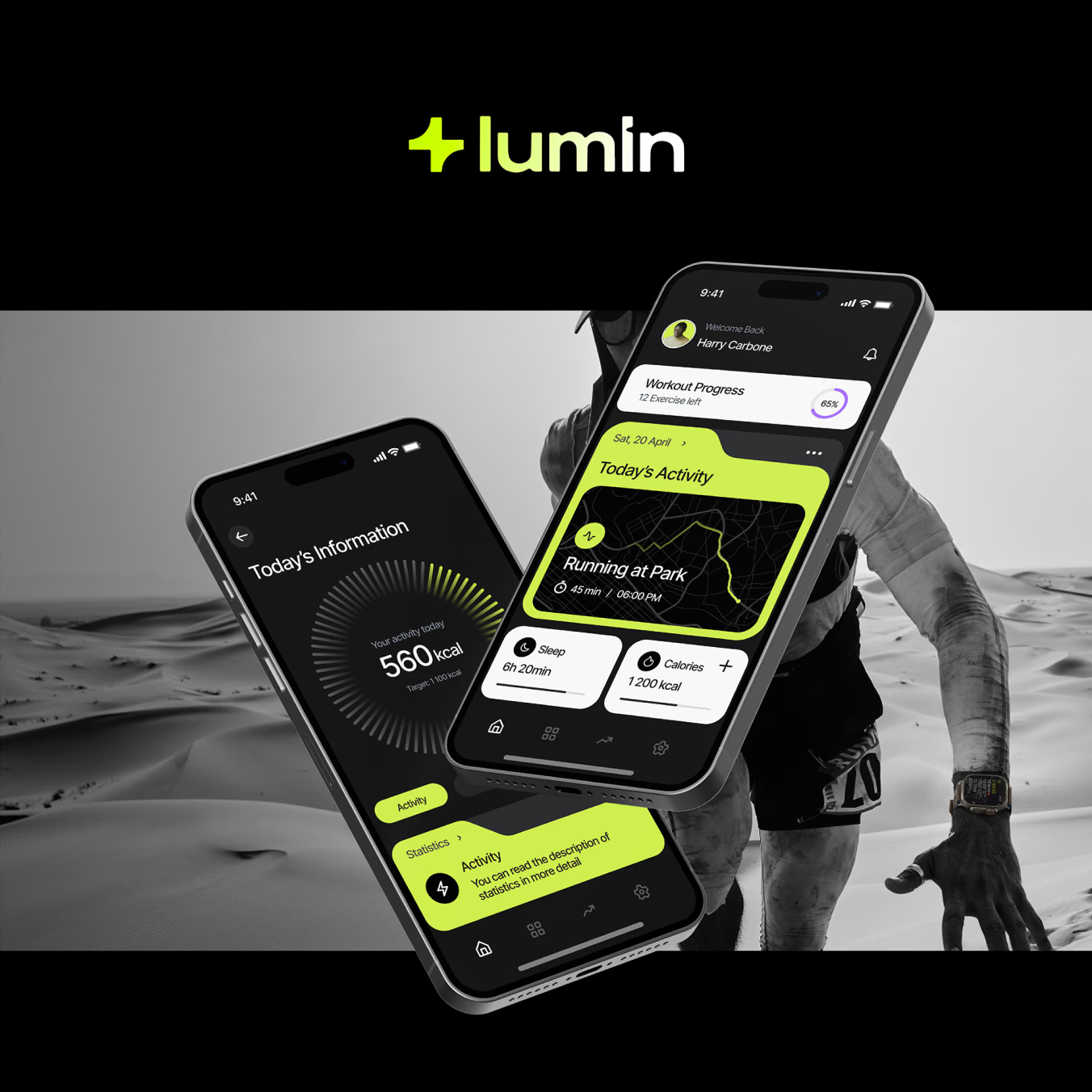
Health & Fitness · UI/UX Design
Lumin Mobile App
A refined fitness tracking mobile app with an elegant, minimal interface — designed for iOS and Android to help users track workouts, nutrition, and wellness goals.
View case study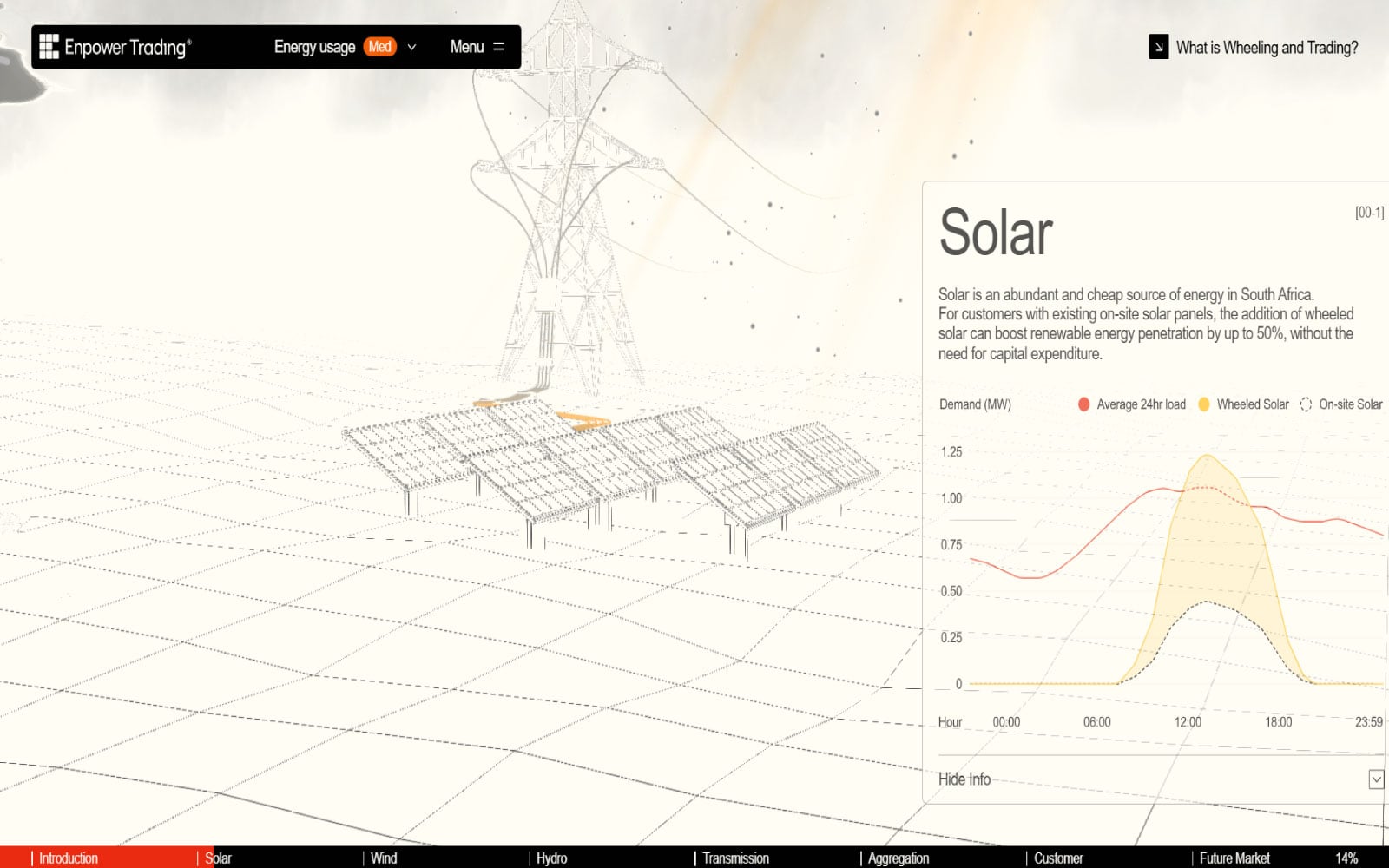
Fintech · Web Development
Enpower Trading
A professional energy trading platform website for a South African commodities trading firm — built to communicate trust, scale, and industry expertise.
View case studyNeed help with your next design project?
Start a projectRelated posts
Keep reading
SaaS Dashboard Design: How to Reduce Churn Through Better UX
Your SaaS dashboard is where retention is won or lost. Here's how to design dashboards that keep users coming back.
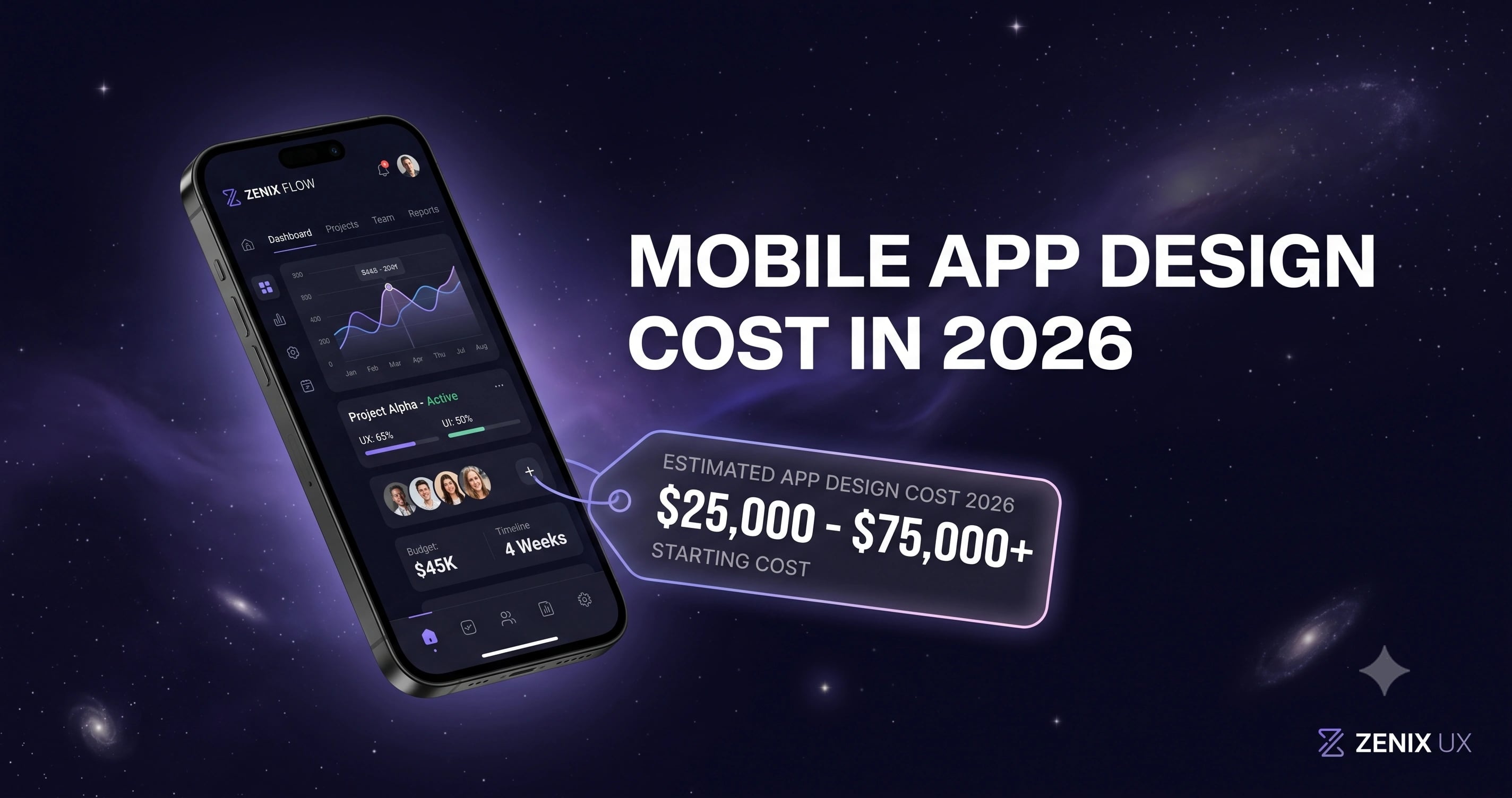
Mobile App Design Cost in 2026: What You'll Actually Pay
Planning a mobile app? Here's what design costs from $2,800 to $31,900+ depending on complexity — with real numbers, not vague ranges.
The Best UI/UX Design Tools in 2026: What We Actually Use
Figma, Framer, Webflow — there are dozens of design tools. Here are the ones we use daily at Zenix UX, and why.